Geomarketing, made simple
Location studies, catchment area, French census data — practical articles to make geomarketing decisions powered by AI.
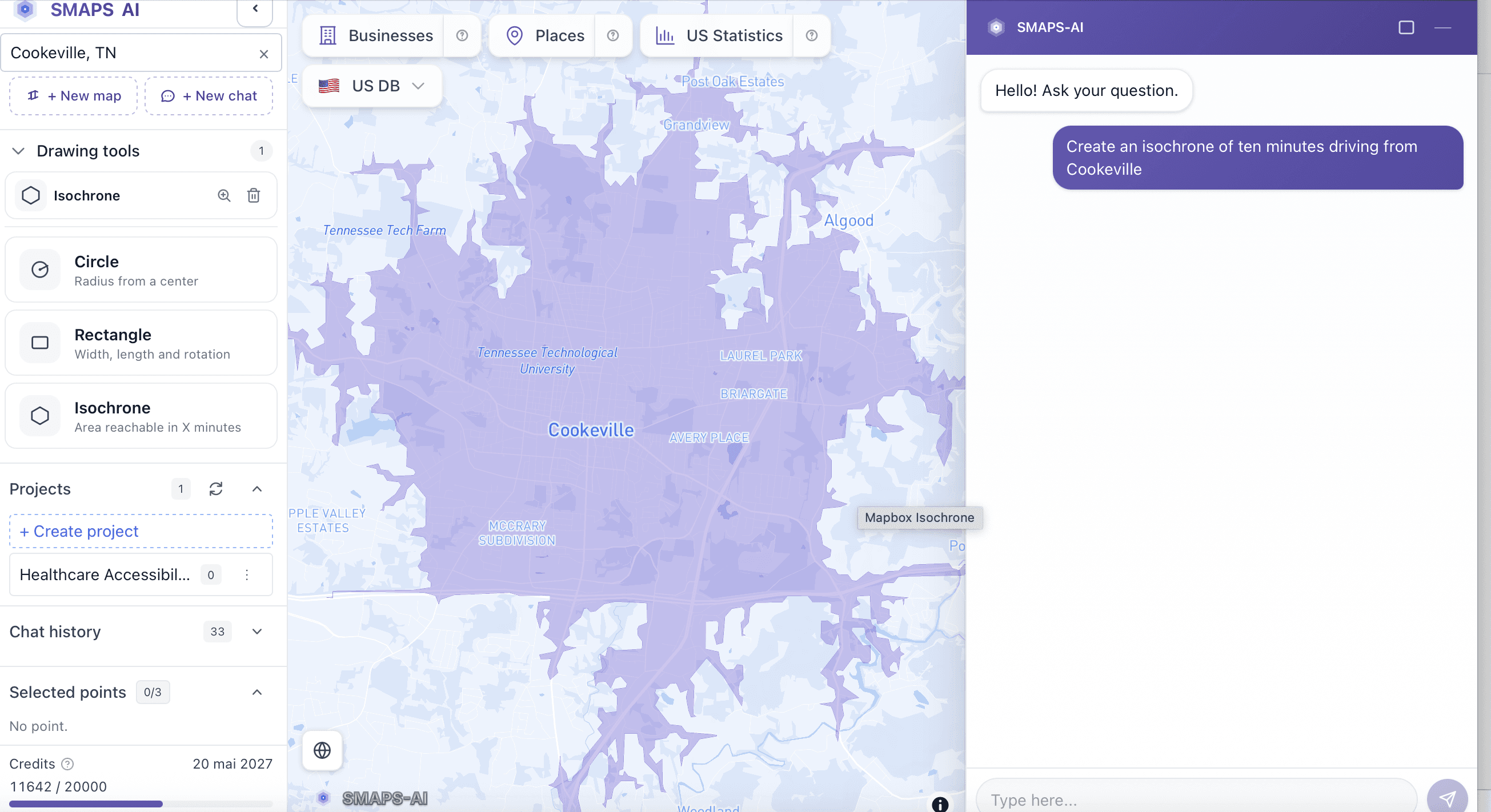
Using geomarketing to support business growth and expansion in the US
Adapt to local markets, improve site selection, measure and optimize performance — a geomarketing playbook for U.S. expansion with SMAPS-AI.
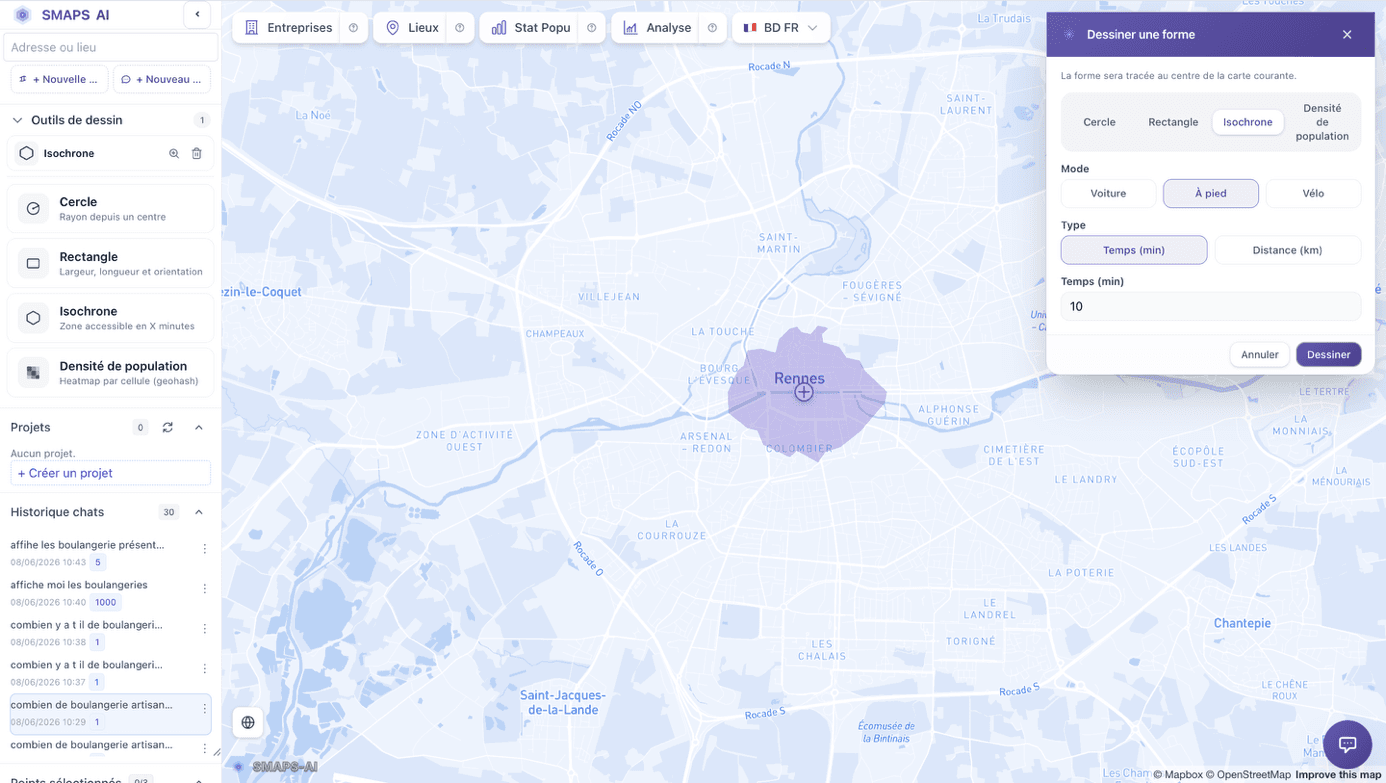
How to do a market study to open a business (complete guide)
Market study, location choice, competitive analysis: every step to open a business methodically, without getting it wrong.
Read article →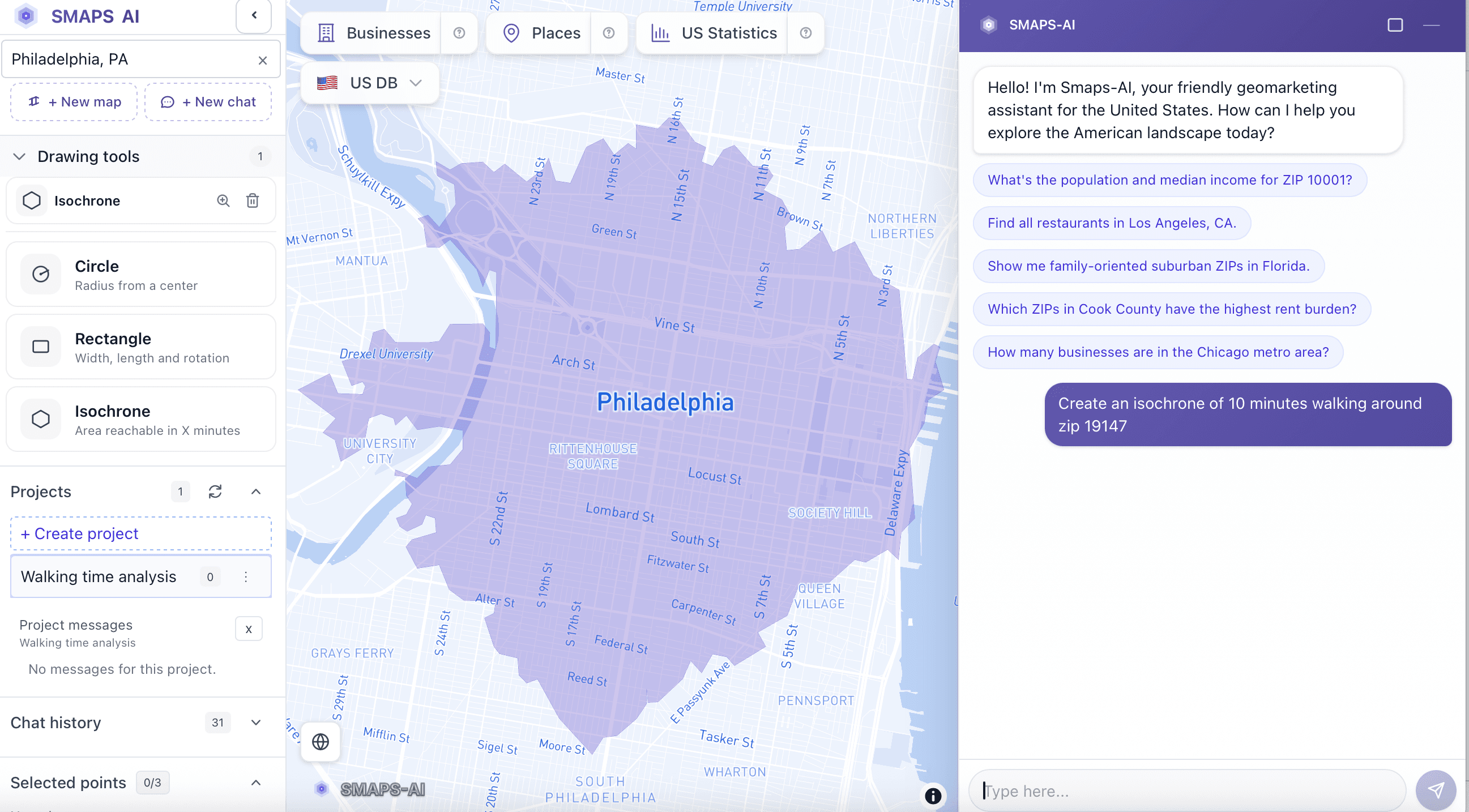
How geomarketing helps US businesses reach the right customers
Understand your trade area, focus sales and marketing efforts, and refine your growth strategy — a practical geomarketing guide for the U.S. market with SMAPS-AI.
Read article →Isochrone catchment area: everything you need to know (and how to draw it without GIS software)
Isochrone, circle, isodistance: which method should you use for your catchment area? Complete guide with sector benchmarks and a case study.
Read article →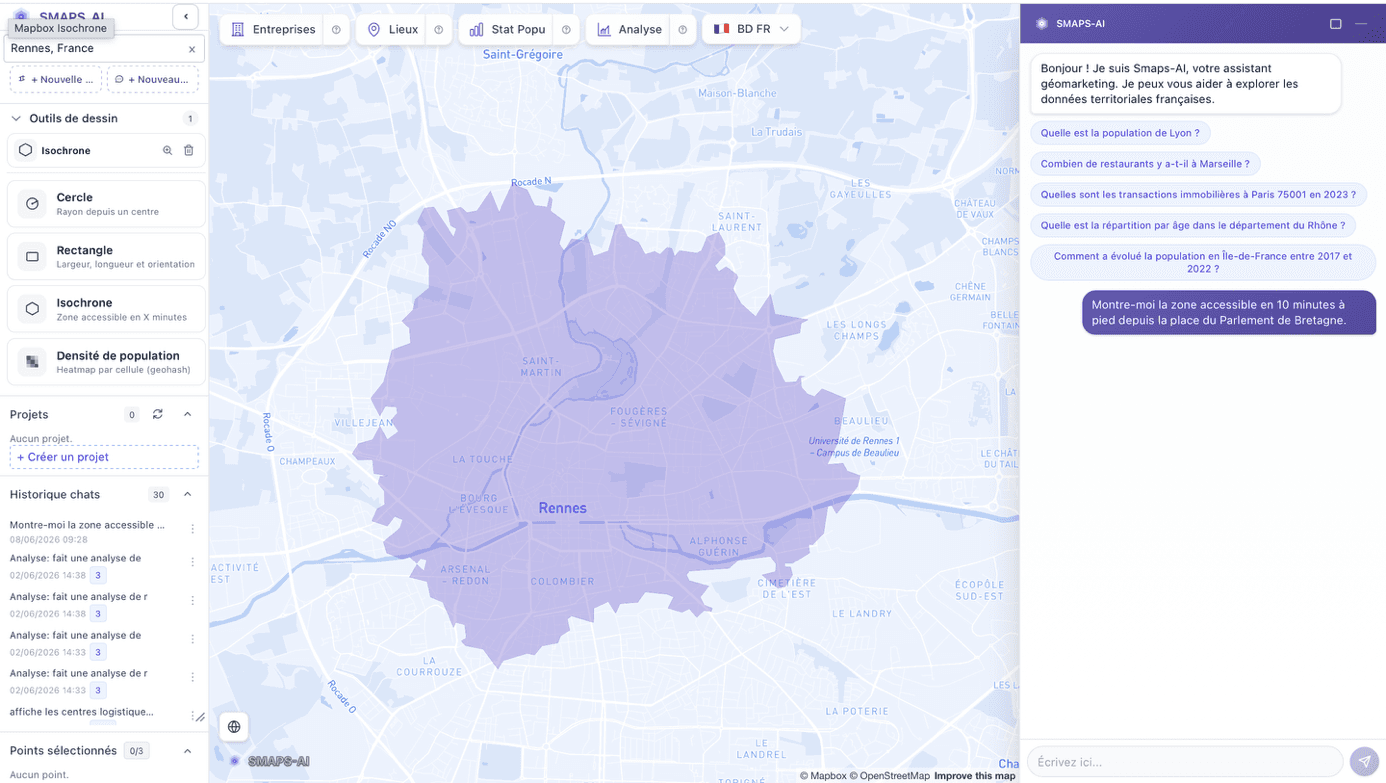
How to run a location study with AI in 10 minutes
Complete a full location study in 10 minutes with AI — catchment area, official census data, and competitive analysis with no GIS expertise required.
Read article →Geomarketing combines geographic and socio-demographic data to guide your location decisions: where to open a store, how to define a catchment area, which neighbourhoods actually concentrate your customers. On this blog, we turn these sometimes-technical methods into concrete, actionable guides.
You'll find practical articles on market research before opening a point of sale, computing isochrone areas (real travel time rather than straight-line distance), working with French INSEE data and the IRIS grid, competition and cannibalisation analysis between outlets, and B2B prospecting from official company registers.
Our approach: making these analyses accessible without complex GIS software. Every method shown here can be reproduced in minutes with SMAPS-AI, asking your questions in plain language, across 16+ countries.